A Case of Chemical Incompatibility: Fire Stopping Sealant vs cPVC Sprinkler Pipe
What Happened?
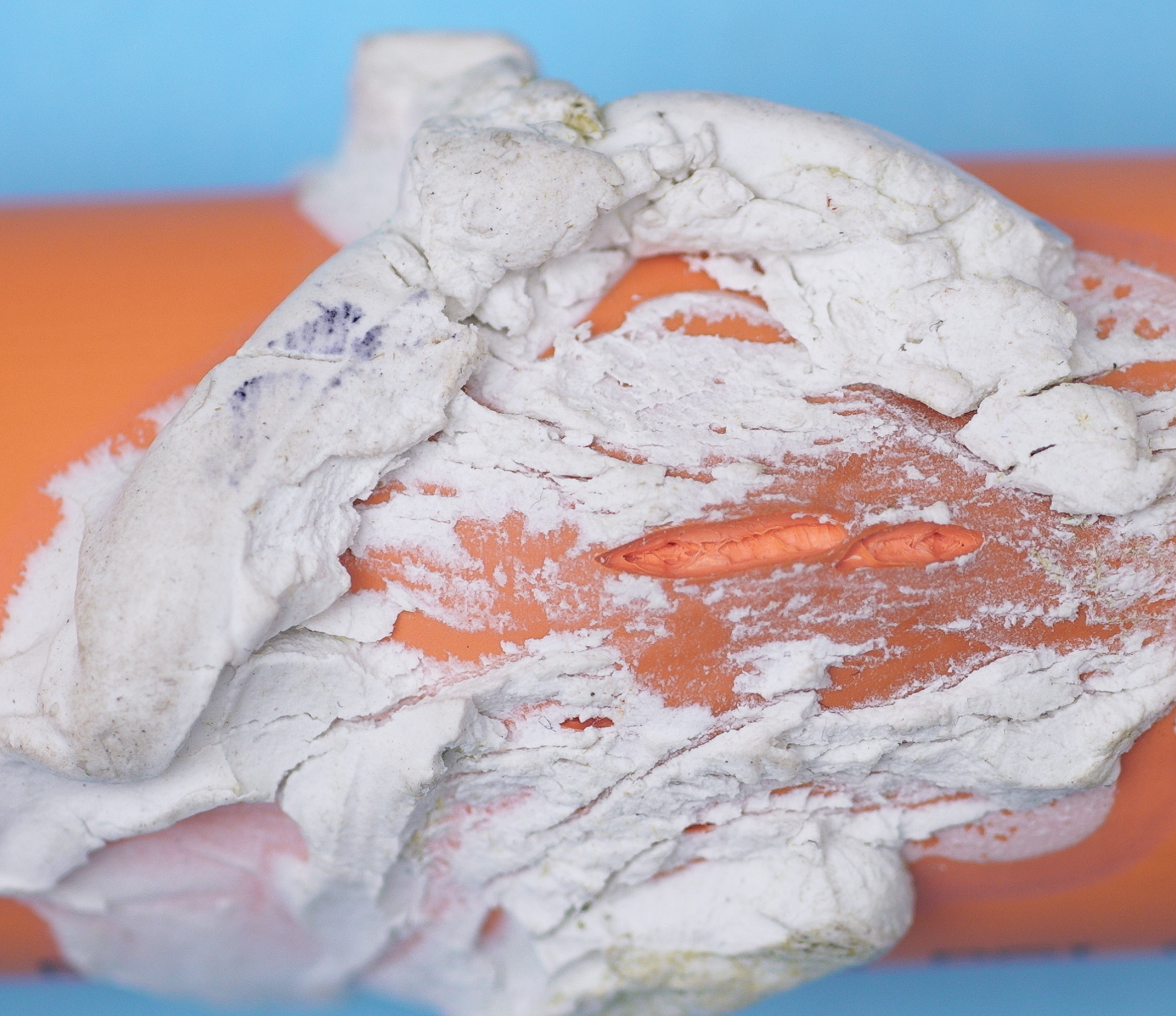
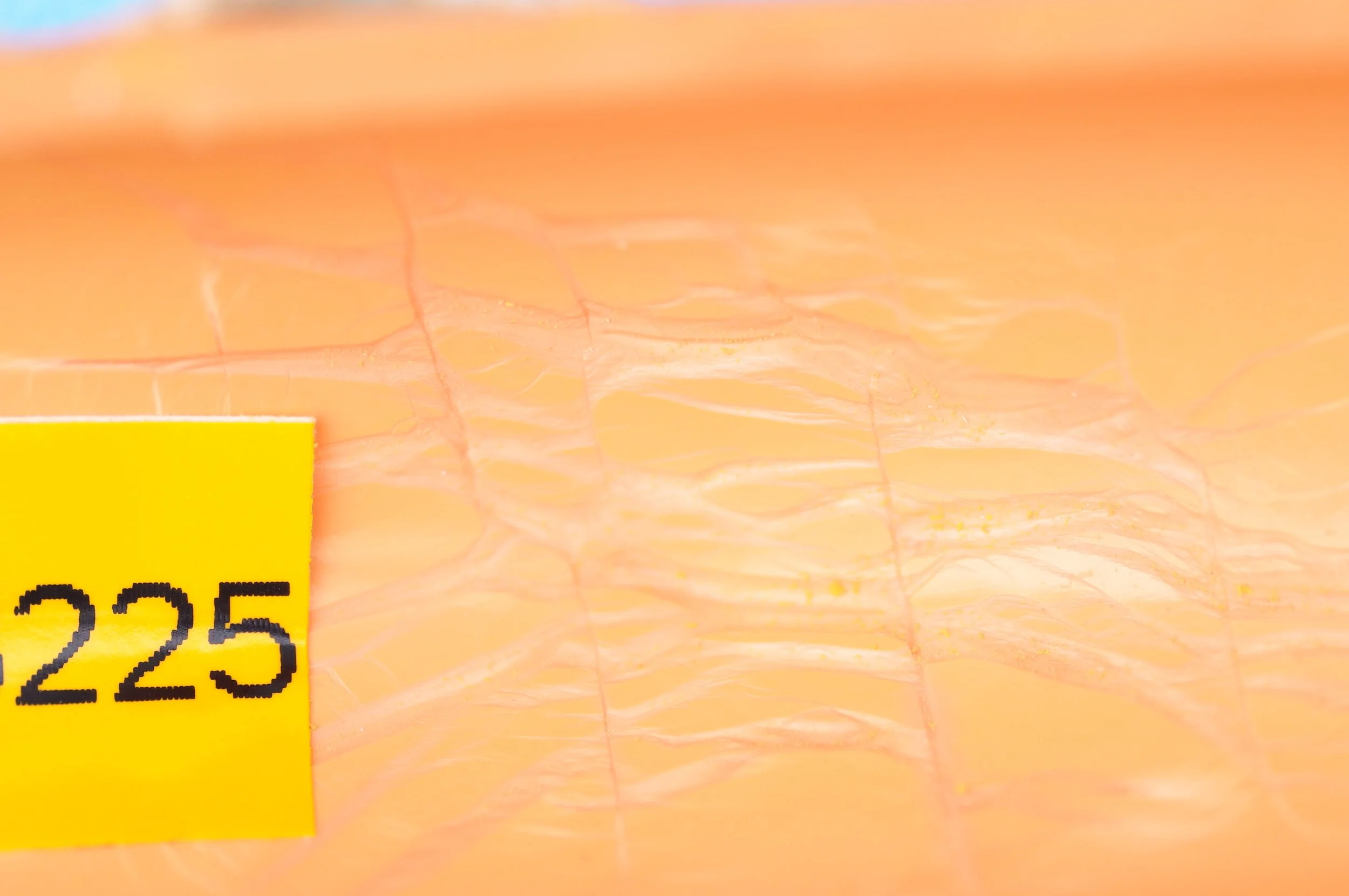
This case centred around a large residential construction, which used a sprinkler fire-fighting system throughout the building. Where the plastic sprinkler pipes ran through the walls, the gaps were sealed using a fire-stopping sealant, to maintain safety in case of a fire. Unfortunately, some years after construction, it was observed that the cPVC sprinkler pipes which were in contact with the fire-stopping sealant were cracking and leaking some water. The blistered and cracking surface of the pipe suggested an apparent reaction with the sealant.
Chemical incompatibility between cPVC pipes and some fire-stopping sealants is a known issue, but the fire-stopping sealant specified for this project was stated to have no adverse reactions with cPVC pipes. With no clear cause for this issue, I was asked to examine the site, obtain samples of the pipe and sealant for analysis, and perform a thorough investigation of the issue. I was also provided with a fresh, unopened cartridge of the fire-stopping sealant, and a fresh unused section of cPVC pipe, to act as references for my analysis.
“We now had evidence of chemical migration between the products, and proof of incompatibility between them. But the question remained - why?”
How did we analyse it?
The cracks in the cPVC pipe were quite evident, and confined entirely to areas that had been in contact with the sealant. It seemed quite apparent that there was an issue of compatibility between the two, despite the manufacturers advice.
To start my analysis, I used Scanning Electron Microscopy (SEM) with Energy Dispersive X-ray Spectroscopy (EDS) to determine the elemental composition of the pipe, the sealant, and the interface between the two. This analysis found that the concentration of chlorine within the pipe changed the closer it was to the sealant. We now had evidence of chemical migration between the products, and proof of incompatibility between them. But the question remained - why?
The next step of analysis was Fourier-Transform Infrared Spectroscopy (FTIR), which can fingerprint the materials much more specifically that SEM-EDS can. FTIR analysis gives the results in the form of a spectra, a graph of sorts. Comparing the spectra of two materials allows you to assess how similar the two materials are. I used this technique to compare the samples I obtained on-site, to the unused reference samples I was provided. I was shocked to find that the spectra of the sealant used on-site was quite different from the spectra of the reference sample of sealant. The sealant that was used on-site, was not the sealant that had been specified.
My client provided me with samples of other types of fire-stopping sealant, which I also analysed and compared the spectra. I eventually found a good spectral match between the sample obtained on-site with a sealant product which is known to have compatability issues with cPVC pipes.
What was the resolution?
I prepared a full Technical Report on my findings, showing the discrepancies between the spectra from the various samples of sealant, and the eventual match with an unsuitable sealant. My client had to perform a full review of the works carried out by the various sub-contractors. Eventually, the culprit was identified. The cracks and leaks in the sprinkler pipes were found only within the areas a particular sub-contractor had performed works in, and there was no sales record of that sub-contractor even purchasing the specified sealant. The subcontractor had to fully repair the works, removing the old sprinkler pipes and sealant, and replacing with new. This remediation work was performed under very close scrutiny!
Have you had product performance issues? A problem that you cannot seem to solve? For a science-supported, evidence-based Expert Opinion, be sure to Contact Us today!