Materials Analysis
Forming the core of our business, materials analysis is an umbrella term for the testing or examination of an object or material, to find out more about it. This may be to determine if it is fit for purpose, to find the root cause of an issue, or to examine for changes in the sample.
Optical Microscopy
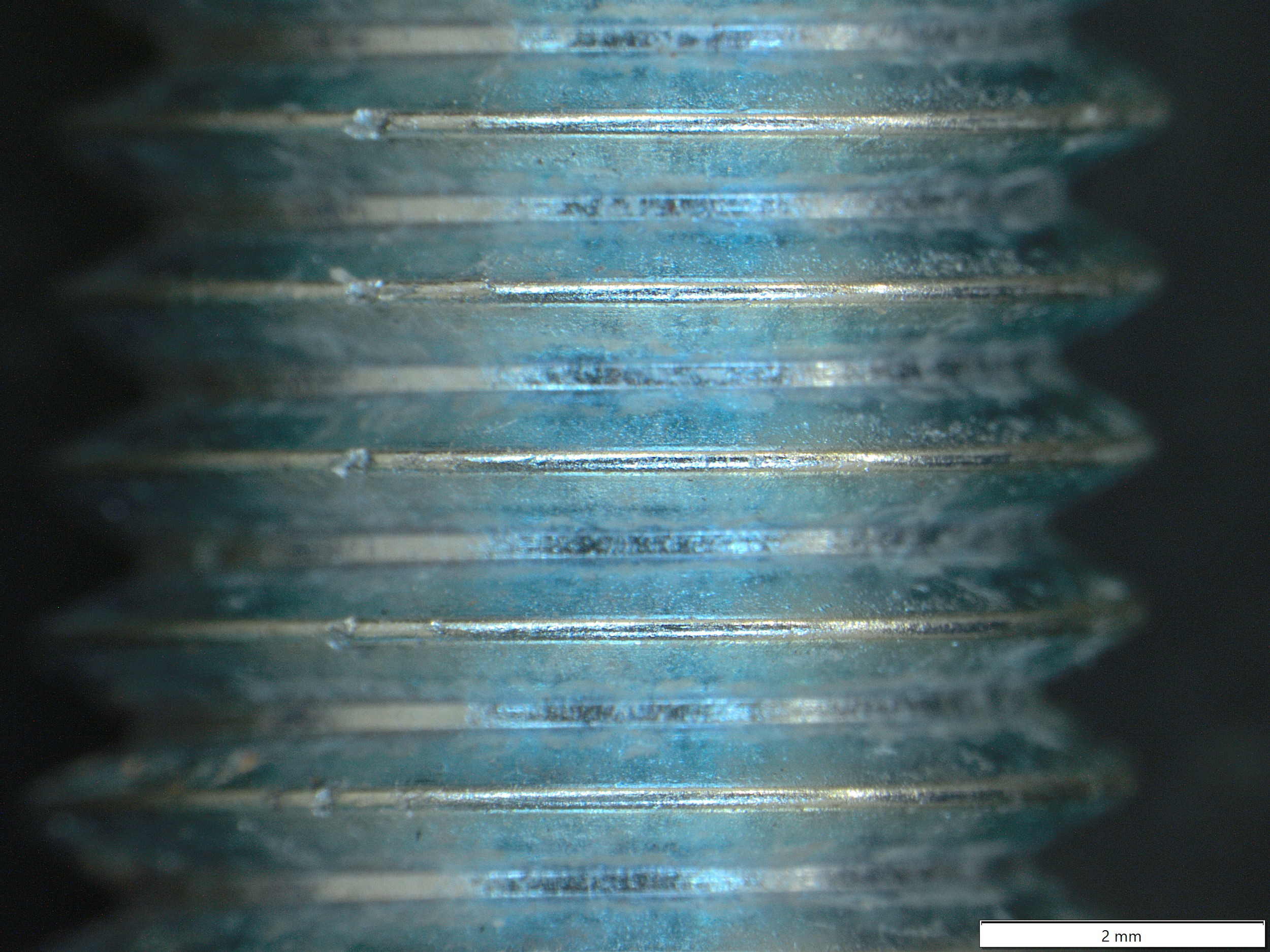
Optical Microscopy uses reflected light to compose a photograph. It is the “normal” microscope that people may have used in school.
It provides good general information about the appearance of a surface, and is usually the first type of examination we use.
We use several different types of microscope for different samples. The magnification provided ranges between 1.5x - 100x, with varying levels of depth of focus (e.g. in examining the threads of a bolt, the centre is focus but the sides are not).
One limitation of this method is that it can only help us see a sample better, but it can’t tell us anything our eyes dont.
Scanning Electron Microscopy
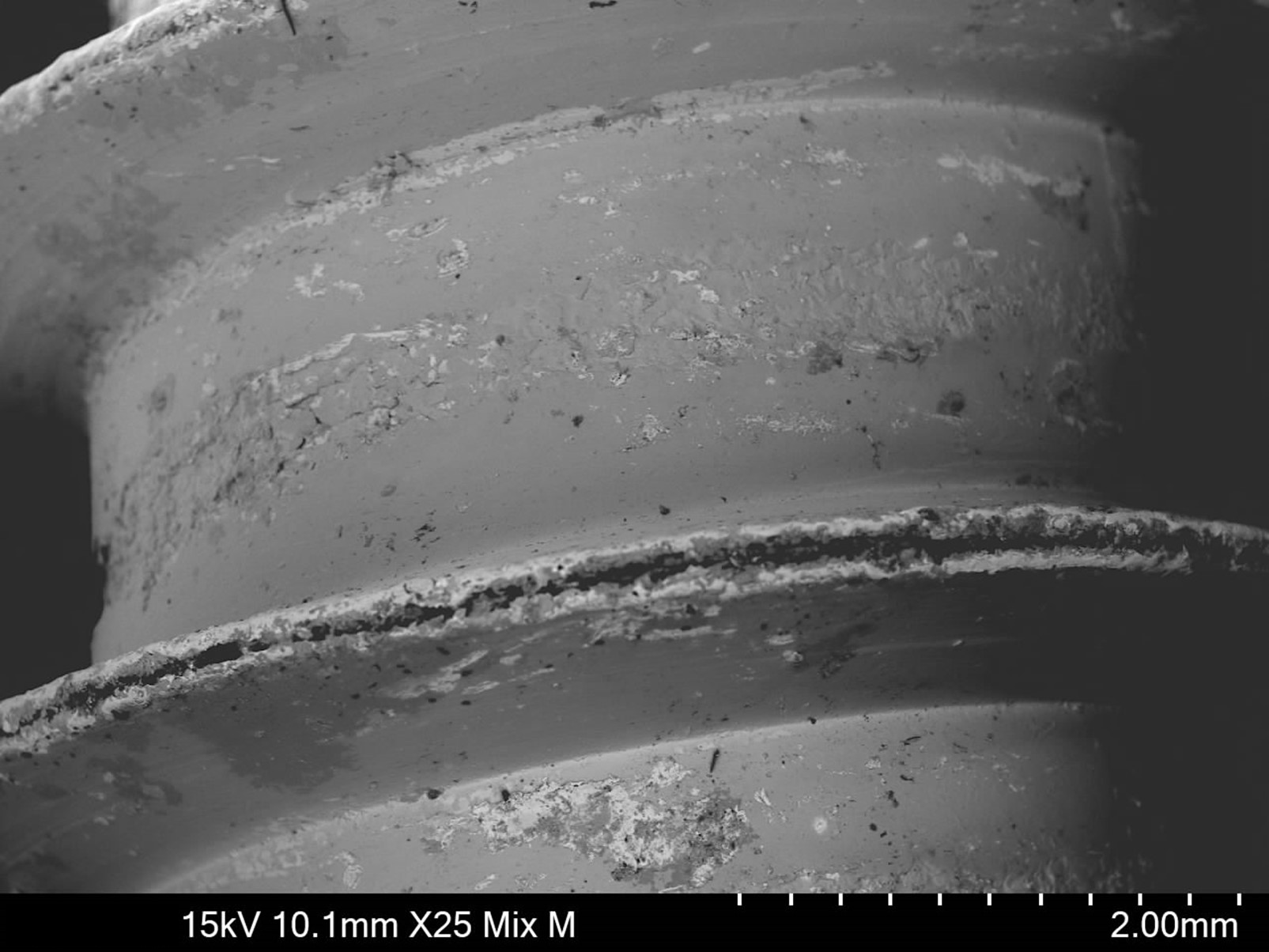
Scanning Electron Micoscopy uses a different technique, by shooting a beam of electrons at the surface of the sample. Some of these electrons bounce right off the surface, and are detected by the instrument. This is used to compose a grey-scale photograph.
This provides more detailed information on the surface, as any differences in material or contamination will appear differently.
SEM has a very wide range of magnification levels, between 50x to 10,000x or more. At the highest levels of magnification, correct sample preparation becomes extremely important.
One limitation of this method is the sample size - examination can only occur in a vacuum, limiting the maximum sample size to approx 50x50x50 mm.
Energy Dispersive X-ray Spectroscopy
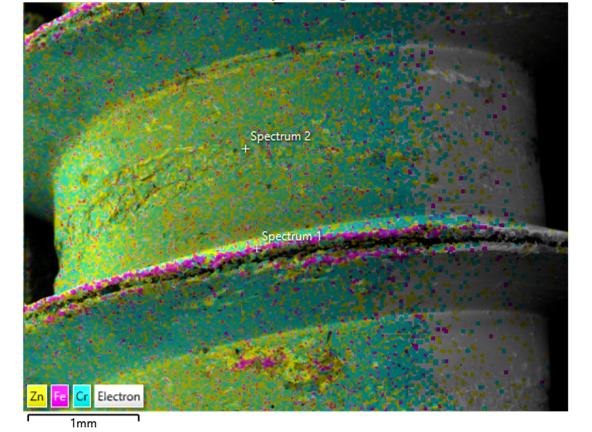
This analysis technique is closely linked to SEM, housed within the same instrument. It is used to determine the elemental composition of selected areas within the SEM photograph.
This can be used to identify contamination or characterise a material. For example, in the analysis of a threaded bolt, we can see that the steel bolt has received a protective coating of zinc chromate.
One limitation of this method is that it can only identify elements. If we analyse a piece of plastic, it would tell us theres a lot of carbon, but it couldnt distinguish between PET vs PP.
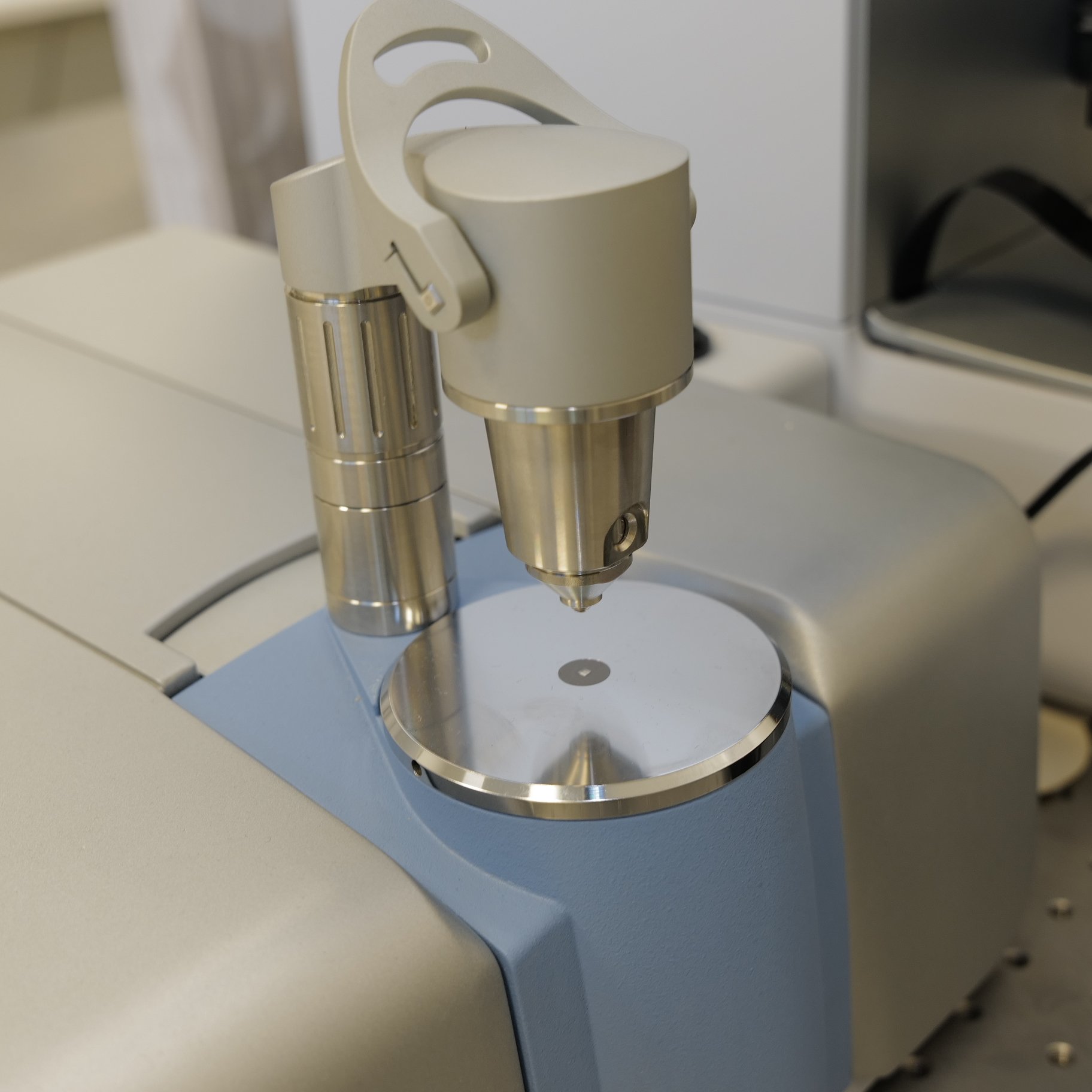
Fourier Transform InfraRed Spectroscopy
This technique is used for “fingerprint” identification of certain materials, most notably polymers. Where EDS will only detect carbon in a sample, FTIR can detect how the carbon and other elements are connected or bonded, through the absorption of infrared light, and thereby identify the material.
This analysis can be useful in root cause analysis
One limitation of this method is that it can only be used with materials which absorb infrared light. Metals, for example, cannot be analaysed (although contamination upon the surface of the metal may be).